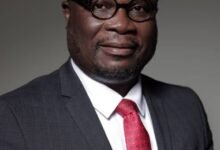
Restructuring of C.K. University of Technology and Applied Sciences will be my legacy (1)

C.K. Tedam University of Technology and Applied Sciences (CK-UTAS) is located in the Kassena-Nankana Municipal of the Upper East Region. It was formerly Navrongo campus of the University for Development Studies (UDS). The university is named after Clement Kubindiwor Tedam, a prominent native of the municipality.
The Ghanaian Times had a conversation with the first Vice Chancellor of the university, Professor Eric Magnus Wilmot, in his office at Navrongo last Thursday (Nov 4) excerpts of which are provided below:
Question: Prof Wilmot, congratulations on your appointment as the first VC of the university. Please, could you take us through how the university came into being?
Ans: Thank you. The quest to convert this place to an autonomous university has history. It was not just now, even during former President John Mahama’s time, there were attempts, a number of things were done, the then Wa campus was also included.
My impression was that the pressure for it came more from Wa than here. Eventually in 2019, the Act of Parliament (Act 1000) was passed, but when the act was passed, implementation did not take place till last year, around May, when the University Council was put in place and principal officers were appointed: VC, the Registrar and Director of Finance.
I was not even around at the time; I was in the US when my appointment came. We had to work remotely because of COVID-19. It was until around July, before I came and by the time I got here, it was August. So that was what happened. The then campus of UDS has changed and because UDS has put this place together as an applied science campus, I believe that is part of the reason we assumed that name.
I was not around when the decisions were taken so I could just guess. My other guess was that maybe the government was looking
at the experiment with Kwame Nkrumah University of Science and Technology (KNUST).
Remember at independence, KNUST was constructed because the thinking was that we needed the university that would train the engineers to lead our industrialisation. I think generally that experiment has proved profitable for this country. And my other thinking is that the government was using that as a basis.
If our plan is to give every region a university, it is better we don’t dismantle the structures there, but remodel something that looks like KNUST to be the engine of growth for the northern sector. So, for me, those may be the two [factors] that got us to that, but if you look at it, they have been very careful to make it in such a way that people don’t confuse it with KNUST, but essentially it is the same thing. There are sciences and technology. Those were brilliant ideas to get this to start. That is the starting point; that is why we are here today.
Ques: A new university needs the financial muscle to start with, do you have the seed capital from the government?
Ans: Interesting; the answer is no! All the new universities that came up, none of us has been given seed money. Government did well though to provide vehicles for the principal officers. But I am not sure that all the efforts are in vain; we are still talking and I know that the government will come to our aid at the right time. COVID-19 has pushed several nations, including even the mighty US, which is suffering some of these things.
Therefore, I don’t complain much. My motivation is that you give me the most difficult situation, just give me the resources to work and I will find a way of working; and we will find a way of working. I know government support will come.
Ques: You have been appointed at the most difficult time in the midst of the COVID-19 pandemic. How are you going around it? Has it disrupted academic work or your plans?
Ans: Yes COVID-19 has affected us but I wouldn’t say it has completely disrupted us, things would have moved faster if COVID-19 was not a factor.
Our science and maths education master’s programme had to be shifted online. The students only come here for practicals. We have finished one batch online. We even shifted some of our activities online but we are largely back to face-to-face lectures.
Ques: The university is a little over one year of existence, any landmark achievements?
ANS: We have restructured the place, we came to meet faculties of mathematics, applied sciences and earth and environmental sciences. As of now, we have restructured our programmes into 11 schools; some have taken shape, others we are still working on to get accreditation. Some programmes have been developed and sent to professional bodies to look at before accreditation.
For instance, we have the School of Nursing and Midwifery which has been looked at by the Nursing and Midwifery Council, the legal
entity responsible for nursing and midwifery. If they say yes, then we can send for accreditation.
The medical school curriculum has been completed and sent to key people to look into it after which we will send it to the Ministry of Health and Ghana Health Service.
Computer Science was under School of Mathematical Sciences and we have given them complete autonomy. What used to be earth and environmental sciences have been reorganised and brought under different schools.
We are bringing on school of modern languages as we have a French language centre and after engaging the French Embassy, they have agreed to run the programme in such a way that Francophone countries can come and take our programmes if we have a strong language programme and change the centre into a modern language centre.
As we speak now, we have been admitted to the Association of French Universities in Africa, the only university in Ghana that is a member. They have even donated a magnetic stirrer, a machine that automatically mixes chemicals and materials to perfection.
We are going to open a School of Public Health, and the nursing programme will start with programmes in adult nursing, public health, paediatrics, and midwifery. Before now, the paediatric program had been post-basic programme but after meeting with the Nursing and Midwifery Council, they agreed to make it a basic program.
There are public health programme and the school of public health; one is to train public health nurses and the other is to train public health doctors so we are bringing that.
Of course, we are going to roll out agriculture programme next year, and we want to start it as a Centre of Integrated Irrigation and Aquaculture.
If we have farmers all around, all these irrigation companies, I don’t see why we cannot tap into that to run a programmes that will benefit them. We came to meet the Water, Sanitation and Hygiene Programme, we will keep the centre running.
To be continued
BY SALIFU ABDUL-RAHAMAN
![IT must be one of the most difficult – and exasperating – tasks in the world to be the President of a nation like Ghana. For you may travel all over4 the world, talking to the leaders of “the developed nations”, to try persuade them that the pandemic that is afflicting the world, Covid-19 (with its variants) is a truly global destroyer and thatnowhere is safe from it, until everywhere is safe. You may deploy your most eloquent language to point out that although, the scientists of the “developed countries” have managed to manufacture a vaccine that has been seen to work against the pandemic, the politicians of the “developed countries” are, contrary to undertakings they have made to the World Health Organisation (WHO) hoarding the vaccine in their countries. Reports suggest that whereas the governments of the “developed countries” are targeting 100 percent of their populace for vaccination, and getting closer to their objective every day, less than 10% of the populace of the developing countries have so far been vaccinated, as a result of a lack of vaccines. Is this fair? you ask. Air travel (you continue) has made international contacts extremely easy. And since the Covid-19 virus and its latest variant (Omicron) in particOman Ghana versus Covid-19 08 www.ghanaiantimes.com.gh GHANAIAN Times Features TUESDAY, DECEMBER 21, 2021ular, are very transmissible. So it is in everyone's educated self-interest to see that all people on the planet are fully vaccinated. As a result of your Government's efforts, you hear that plenty of vaccines have arrived in your country and you are emboldened to announce that your Government will soon be able to vaccinate its entire adult population. Then, you get the shock of your life: an intelligence report tells you that some mischievous people are spreading the fake news that if a person allows himself or herself to be vaccinated, the “vaccine will make that person vote for your governing NPP whether he/she wants to do so or not!” WHAAAAT! How does one counter such fake news? If the Government say it is not true, the conspiracy theorists shoot back, “And are you so naïve as to expect them to admit that the vaccine will make you vote for the NPP?” Wow! Are people so wicked that despite the gains that the world has already made through vaccination (such as the elimination of small pox from the world and the near-extinction of polio and yellow fever) they try to dissuade others from taking advantage of anti-Covid vaccination? Especially since people who are clever enough to invent such fake news must know of the horrible pain that Covid-19 subjects people to, before it finally kills them? What makes the anti-Covid vaccination story doubly awful is that its seeds are sown on pre-fertilised ground. In the past, some wicked scientists in the developed countries have allowed themselves to be used by their [usually racist] governments to administer harmful vaccines and other medications to people, using the lie that such interventions can save them from certain disease. One of the most devastating such deceptions occurred in the United States in 1932. Below is the horrible story as told on the OFFICIAL website of the US CENTRES FOR DISEASE CONTROL [CDC]: https://www.cdc.gov/tuskegee/timeline.htm QUOTE: THE U.S. PUBLIC HEALTH SERVICE SYPHILIS STUDY AT TUSKEGEE In 1932, the USPHS, [US Public Health Service] working with the Tuskegee Institute, began a study to record the natural history of syphillis. It was originally called the “Tuskegee Study of Untreated Syphillis in the Negro Male” (sic) [now referred to as the “USPHS Syphilis Study at Tuskegee”]. The study initially involved 600 Black men — 399 with syphillis, 201 who did not have the disease. Participants’ informed consent was not collected. Researchers told the men they were being treated for “bad blood,” a local term used to describe several ailments, including syphillis, anaemia, and fatigue. In exchange for taking part in the study, the men received free medical exams, free meals, and burial insurance (sic)! By 1943, penicillin was the treatment of choice for syphilis and becoming widely available, but the participants in the study were not offered treatment. In 1972, an Associated Press story about the study was published. As a result, the Assistant Secretary for Health and Scientific Affairs appointed an Ad Hoc Advisory Panel to review the study. The advisory panel concluded that the study was “ethically unjustified”; that is, the “results [were] disproportionately meagre, compared with known risks to [the] human subjects involved.” In March 1973, the panel advised the Secretary of the Department of Health, Education, and Welfare to instruct the USPHS to provide all necessary medical care for the survivors of the study. The Tuskegee Health Benefit Programme was established to provide these services and in 1975, participants’ wives, widows and children were added to the program. In 1995, the program was expanded to include health, as well as medical, benefits. The last study participant died in January 2004. The last widow receiving THBP benefits died in January 2009. ... I973, a class-action lawsuit was filed on behalf of the study participants and their families, resulting in a $10 million, out-of-court settlement in 1974. On May 16, 1997, President Bill Clinton issued a formal Presidential Apology [over the study.] UNQUOTE In Ghana, the fake news that the anti-Covid vaccine would make people “vote for the NPP” has already begun to cause disagreements in some households. A family known to me has had to dismiss its house-help because she obstinately refused to take the jab. To illustrate the way the way the political message contained in the fake news has been camouflaged, I offer a version of the last conversation between the head of the household and the house-help: BOSS: Hey, “A”, you are very lucky! Instead of you going around to look for the vaccinators, they are coming to our estate! HOUSE-HELP: They are coming here? B: Yes! H: But Boss, I told you that my brother took the jab and had to be admitted into hospital. B: It doesn't mean that you too will become ill if you get the jab. It affects different people in different ways. Look, as you know, I have had all my own jabs and I have never been ill – as you know! H: But Boss, if you have taken all your jabs, then you are PROTECTED, are you not? B: Yes, I am. H: In that case, even if I become infected because I have not taken the jab, I cannot transmit the disease to you and YOU will be all right? B: I can't say that! Because, as I have explained to you, the pandemic can affect different people in different ways. H: Then the jab is useless? B: Listen, I can't take any risks with such a dangerous disease. Either you take it or you leave, I am sorry. I cannot allow you to expose me and my family to the risk of catching Covid. As I reported earlier, the House-help chose to leave. Both her Boss and I are convinced that it wasn't mere logicthat made her decide not to take the jab. She was probably under the influence of a church/cult. Or political propaganda! • Omicron cases at Kotoka International Airport are amongst the unvaccinated](https://ghanaiantimes.com.gh/wp-content/uploads/2021/12/GT-8.pdf-Adobe-Acrobat-Pro-DC-4-220x150.jpg)